Tuesday, May 04, 2010

Orange Eats Creeps Galleys

We just printed galleys of Grace Krilanovich's The Orange Eats Creeps. If you are affiliated with the media and would be keen on checking out a copy, please contact Brian Obenauf by email at brian[at]twodollarradio.com.

Steve Erickson says in his introduction that "The exhilaration of such a novel is nearly beyond calculation. If a new literature is at hand then it might as well begin here."

It’s the ’90s Pacific Northwest refracted through a dark mirror, where meth and madness hash it out in the woods. . . A band of hobo vampire junkies roam the blighted landscape—trashing supermarket breakrooms, praying to the altar of Poison Idea and GG Allin at basement rock shows, crashing senior center pancake breakfasts—locked in the thrall of Robitussin trips and their own wild dreams.
A girl with drug-induced ESP and an eerie connection to Patty Reed (a young member of the Donner Party who credited her survival to her relationship with a hidden wooden doll), searches for her disappeared foster sister along “The Highway That Eats People,” stalked by a conflation of Twin Peaks’ “Bob” and the Green River Killer, known as Dactyl.
With a scathing voice and penetrating delivery, Grace Krilanovich’s The Orange Eats Creeps is one of the most ferocious debut novels in memory.

'The Great American Nose-Picking Novel'

The May issue of Dazed & Confused has a bitchin' write-up on Crust and interview with author Lawrence Shainberg.
Here's a highlight:
"A witty-erudite and gleefully gross-out satire of our information-clogged and techno-bananas age. An energetic and thrillingly modern romp through a habit that's as old as the hills."
And here's one Q/A from the interview:
"Dazed: Crust effectively satirises the sheer glut of information that contemporary readers are exposed to. Are you apprehensive about the future of reading in the age of the internet?"
"LS: Yes, no . . . yes. I don't think anyone understands the extent, meaning and effect of the information explosion. Among other things, I think it creates a situation in which our basic relation to information - which most of us grow up believing to be an unquestionable virtue - becomes adversarial. Add to this the fact that information glut is finally the ultimate censorship - since it trivializes all information (if 100 orchestras are playing under your window, does it matter if one is playing Mozart?) - and that nothing thrives on such repression like corporate media, and you have a situation which may well turn out to be catastrophic."
To throw in an appreciation for Dazed & Confused: It's a beautiful magazine. The May issue has an interview with Oliver Stone and pieces on Fernando Pessoa and Al Jarnow. Easier access is another reason it's time to ditch the OH.

Saturday, April 24, 2010

Avid for Athens

You can help bring Avid Bookshop to Athens, Georgia, by voting for them in the Pepsi Refresh Everything.

Magnifico


This past week we received finished copies of foreign editions of a couple of our books: The Drop Edge of Yonder in French and Some Things That Meant the World to Me in Italian.
Some Things That Meant the World to Me is published in Italy by Elliot Edizioni.
The Drop Edge of Yonder is published as 'Zebulon' in France by Editions Christian Bourgois.
Erotomania: A Romance is published in Spain by Tusquets Editores.
The cover that I really love is the Egon Schiele painting for Erotomania.

Friday, April 23, 2010

Our Bright Future


Barnes & Noble will sell their Nook in Best Buy stores. Amazon's Kindle will be available in Target. This week, in a piece in the Wall Street Journal, Barnes & Noble announced they will return to television advertising to spotlight the Nook.

Here's my pull-quote:
"Companies will have to create demand, which will take a lot of advertising," says Sarah Rotman Epps, an analyst at Forrester Research.

Put into context, Kindle sales "account for 2% of Amazon's revenue and its e-book sales account for an additional 1.5%." Once the handful of multi-national corporations who stand to profit lobby people through advertising and successfully convince them that they absolutely need these e-readers, then those percentages will rise.

==============

I originally wrote this piece last fall that they posted at The Rumpus. From the time our distributor made the opportunity available to us in the winter of 2008/2009, we basically dragged our heels on making our titles available electronically until this spring. Now, three of our titles are available for download as e-books (Some Things That Meant the World to Me, by Joshua Mohr; The Drop Edge of Yonder, by Rudolph Wurlitzer; I Smile Back, by Amy Koppelman).

I'm on the fence about doing more, and I'd love to hear back thoughts and opinions.

My concern -- as the e-newsletter Shelf Awareness points out -- is that "Amazon seems to be engaging in some odd pricing strategies . . . pricing some hardcover and paperback bestsellers at e-book levels." They're taking a dramatic loss selling these hardcover books that retail for $25 at this price, further elbowing out local independent bookstores while single-handedly setting an industry-wide pricing standard of $9.99. This amounts to Amazon devaluing everything that a writer or a publisher does!

==============

E-Doldrums

I have several messages saved permanently on my cellphone’s voicemail. Every month or so I trudge through the parade, when I’m required to re-save them. There’s a message from my wife and business cohort, Eliza, telling me that our daughter, Rio, has successfully managed to stand on her own. Another one, chronicling Rio’s first steps. Several from Rio, as some words inch out, Eliza gently prodding her along in the background.

And then there’s a stew of Two Dollar Radio-related messages. There’s one from independent publicist Lauren Cerand, saying that she saw Erotomania: A Romance, a novel by Francis Levy, in the window at City Lights. I also have saved messages from nearly every one of the authors we’ve published at Two Dollar Radio over the last two years informing me that their author-copies have arrived. They sound satisfied, and what they have to say always makes me smile.

I remember talking with Larry Shainberg, whose book Crust we published last October. I was asking Larry about Samuel Beckett, whom he was fortunate enough to meet on a handful of occasions and befriend (Larry also wrote a Pushcart-winning monograph on Beckett for The Paris Review). Larry told me that he went to see Beckett in Europe, and the pair was returning to the hotel where Beckett was staying when the desk clerk provided him with his mail, which contained the author-copies of one of his books. I don’t recall that Larry mentioned which book of Beckett’s it was, but I remember him saying that it didn’t matter whether it was your first book or your fiftieth, there’s still that feeling of intense satisfaction and joy that arrives with finally holding your book in your hands.

As a publisher, I derive a great deal of satisfaction myself when the finished book arrives. Recently, when copies of Rudolph Wurlitzer’s second and third novels, Flats and Quake, which we’re re-issuing in a back-to-back edition, came from the printer I immediately broke out my camera and took pictures. Certainly, some of the glee could be attributed to the fact that the book looked as we intended: we were nervous about the flipped/upside-down pages.

I’ve learned that publishing is a drawn-out process that above all demands patience. There is that initial burst of enthusiasm after reading a remarkable submission, then the re-kindled energy over presenting the title to the reps at sales conference, but the real flood of excitement comes upon holding the finished product in my hands. That’s when it’s real, the transition complete, when I find its spot on the bookshelf in my office: it is now a book.

As a publisher we’ve dragged our heels in embracing e-books (or even acknowledging their presence). Through our distributor, Consortium, we’re able to partake in their parent company’s program, that allows publishers to make their books available electronically rather painlessly, albeit with a modest fee. But it took us at least eight months to sign the contract, and we’re still, now, months later, resolving any further contract entanglements with authors.

Part of my reluctance is my inability to resolve in my mind the bitter truth of what we’ll be stamping our brand upon. As a publisher, I know e-books are a cheaper product – both to produce and consume (providing you can foot the tab for the e-reader) – and I’m certain that writers do too. What makes anyone believe that readers won’t arrive at this realization as well? Once the honeymoon with their sleek new gadget ends, they’ll start to demand more for their money. As a commenter to Nick Harakaway’s blog post on e-books points out: “I wouldn’t pay more than $10 for an eBook, because at more than that, I want more than I’m getting. I want a dust jacket, I want something physical. There’s an inherent belief (and I agree) e should never cost as much as its old world equivalent. You really do get less.”

Gimmicks such as Simon and Schuster’s snigger-trigger “Vook” are just the tip of the iceberg. Soon, because of the lack of page-count constraints, e-books will come complete with deleted chapters, a writer’s and editor’s cut, and alternate endings. The result will resemble more a videogame fantasia than a traditional “book.” And I don’t want to read that.

As Emily Pullen, of Skylight Books in Los Angeles, so aptly points out in a blog post: “Creating digital literature and harnessing the medium’s unique capabilities requires a specialized knowledge of programming languages. As such, it is software engineers and computer programmers (the techies) who are best suited to use this new literary medium, not the traditional Writer.”

Most likely, it will be several years and rungs on the evolutionary ladder of the Vook before even its initial potential can be imagined. In the meantime, at Two Dollar Radio we’ll casually make our books available electronically. At our size, the potential fifty dollars a month from e-book sales can make a difference. But I don’t expect many messages from authors calling to share their enthusiasm at their e-books arriving. And I won’t blame them.

==============

As a post-script, I'd like to mention that of the three writers I notified that their "e-book" was available, only one wrote back, (a succinct "Cool!") while the others casually disacknowledged my note. No writer spends their hours toiling by themselves in a dark room to birth an electronic book into the world.

There's this amazing preface to Jaron Lanier's You Are Not a Gadget, which I'm really stoked to read (finish), where Lanier says: "The vast fanning out of fates of these words will take place almost entirely in the lifeless world of pure information. Real human eyes will read these words in only a tiny minority of the cases.

"And yet it is you, the person, the rarity among my readers, I hope to reach.

"The words in this book are written for people, not computers."

Tuesday, April 20, 2010

Stickups by the Stuck Up


It used to be thieves that robbed banks. John Dillinger, Bonnie and Clyde, Pretty Boy Floyd, Jesse James. They pulled off some of the great heists of the l9th and 20th centuries. There was a science to safe cracking. Great holdups predicated on complex planning and timing were the stuff of movies like Thief and The Bank Job.  But in the 21st century, the nature of criminality has taken a new turn. Banks rob from themselves and from their own customers. Recent descriptions of what has gone on in the world of banking resemble the process that occurs when the body attacks itself at the onset of auto-immune disease. Former treasury secretary Robert Rubin, under questioning by the Financial Crisis Inquiry Commission, is hard put to explain actions that were the equivalent of an attack on the very institution he was supposed to be helping to guide (“Panel Criticizes Oversight of Citi by Two Execs,” NYT, 4/8/10).  HSBC and UBS are accused of allowing clients to avoid taxes by actively abetting the creation of off-shore accounts (“2 Charged in International Tax Evasion Scheme Said to Involve HSBC," NYT, 4/15/10). Lehman Brothers uses creative accounting to hide losses (“Lehman Channeled Risks Through ‘Alter Ego’ Firm,” NYT, 4/12/10), and Goldman Sachs is accused of betting against the very products that it was selling to its own customers (“S.E.C. Accuses Goldman of Fraud in Housing Deal,” NYT, 4/17/10). There have always been financial scandals, and the precincts of so-called respectable finance have never been freed from their Long Term Capitals, their Enrons, their Ivan Boeskys, Marc Richs and Michael Milkens. But it does appear that in the last decade the tide has really turned. The stickups are being perpetrated by the stuck up. There are very few reports of masked men entering banks today (even by neophytes of the kind Al Pacino played in Dog Day Afternoon), and if you look at the doors on today’s bank vaults, it is obvious that nothing short of a tactical nuclear device would be able to dislodge them from their hinges. The real threat seems to lie not with the so-called robbers, but with the guys in wingtips and rep ties sitting confidently behind their desks and holding the combination. Aren’t these the same Masters of the Universe Tom Wolfe wrote about in Bonfire of the Vanities? Are you going to trust them with your money?

[This was originally posted to The Screaming Pope, Francis Levy's blog of rants and reactions to contemporary politics, art and culture.]

Bryan Charles’ “Wowee Zowee” and Shawn Vandor’s “Fire at the End of the Rainbow”

The latest from Continuum’s stellar 33 1/3 series of little rock ‘n roll books is Bryan Charles’ treatise on Pavement’s third album WOWEE ZOWEE. Charles, author of the funny and affecting novel “Grab on to Me Tightly as if I Knew the Way” (itself a Pavement song lyric; you could say Bryan is a fan), interviewed all band members and various label staff and recording engineers, venturing to Memphis and generally keeping his unyielding love for the band and the album stuffed into a mason jar of intrepid journalistic inquiry. The launch for Wowee Zowee will be held at Brooklyn’s WORD bookstore on Wednesday, April 21 at 7:30 p.m. Charles will read and sign and answer Matthew Perpetua of Fluxblog’s questions.


Shawn Vandor’s debut collection of stories “Fire at the End of the Rainbow” is one of three coolly attractive books published by the Key West-based Sand Paper Press earlier this year. The press, in “limited operation” since 2003, recently ramped up production with “Fire” and two collections of poems: Stuart Krimko’s “The Sweetness of Herbert” and Arlo Haskell’s “Joker.” The trio is intended as a set, and they are certainly complementary in their Key West-esque peach, cornflower and strawberry pastel covers. All three Sand Paper Press authors toured the West Coast together this February and March. I can personally attest that Vandor’s deadpan delivery of the scatological little doozie titled “Manhood, a Cautionary Tale” at LA’s David Kordansky Gallery brought the damn house down.

Monday, April 19, 2010

Reality Bites


What if someone took David Shields's Reality Hunger, a nonfiction screed about appropriation made up entirely of other authors’ sentences, and simply appropriated it? But doesn’t reality sometimes trump the best fictional offerings? For instance, Saturday’s Times reported the case of a 16-year-old New Jersey boy who was arrested for "activating a public-address system in a Wal-Mart store … and ordering 'all black people' to leave.” What is one to do with a piece of news like this? Is it a failure of education, a litmus test about in-grown racism and prejudice in our society, or does the incident merely illustrate the weaknesses of the store’s intercom, as some Wal-Mart executives apparently believe? “The store’s parent company … issued a statement saying it had modified its intercom system at the store to prevent such breaches,” the Times piece said.

On Tuesday, the Times reported on the death of Wolfgang Wagner, the longtime director of the Bayreuth Festival. Katharina Wagner was Wolfgang’s daughter by his second wife, Gudrun. She had produced a partially nude Meistersinger at Bayreuth, which was booed by audiences. Along with half-sister Eva—the Times reported the two as not having "spoken to each other in many years”—Katharina was appointed to run the festival in 2008. The festival has long bent over backwards to distance itself from implications of Nazi leanings, due to Hitler’s renowned love for Wagner. (The Times reported in the same obit that Wolfgang's mother Winifred Wagner, “an ardent anti-Semite,” gave Hitler “the writing paper on which he composed ‘Mein Kampf.’”) Maybe Katharina should produce an opera at Bayreuth based on a genocidal 16-year-old let loose in an American discount store. After all, we’ve already had an opera about Jerry Springer, and a forthcoming opera about Enron is in the works. What better way for Bayreuth to finally expiate the sins of the past!
[This was originally posted to The Screaming Pope, Francis Levy's blog of rants and reactions to contemporary politics, art and culture.]

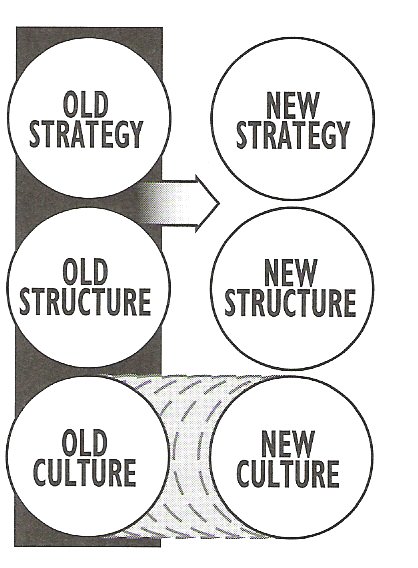
The New Culture

"Culture is increasingly an instrument to divide and differentiate communities. And the leveling pressures of globalization have at the same time provided more and more people with the technological resources to decide for themselves, culturally speaking, who they are and how they choose to be known, seen, distinguished from others."
I'm realizing how true this is, and how this applies to us as a press trying to reach an audience keen on reading edgy literature. And it seems like in time the favor will be to those developing culturally valuable artifacts, rather than those appealing to any sort of quick-hit popular sensibilities.
Fred Ramey, publisher of Unbridled Books, said to me in an email once that what seems to be changing is "the fragmenting (via the internet) of the reading market," and I'm finding his sentiment to be unbelievably true.

Saturday, April 17, 2010

Jersey Shore in the East Bay

San Francisco has many talented writers, and one of my favorites is K.M. Soehnlein. His first novel "The World of Normal Boys" was fantastic, funny, and devastating. Luckily for us, K.M. decided to revisit the characters from his debut romp with his new novel, "Robin & Ruby."

This Monday, April 19th, I'm thrilled to read in the East Bay with K.M. at the Ashby Stage in Berkeley. The evening is themed around "not your usual" beach reading, as some of Soehnlein's new book is set on the Jersey Shore. The stage will be decorated with a makeshift boardwalk and sand. Will it also stink like cologne and garbage to truly duplicate the Garden State? Hmmm. I guess you'll have to come play with us to find out for sure.

I'm going to read from "Termite Parade" which I just got the galleys for this week. It looks fantastic. To be honest, there won't be a lot of "beach" in my excerpt, though I guarantee some "not your usual."

The event starts at 7. They'll be serving "sex on the beach" to set the mood... classy. Maybe in true Jersey Shore style, we can drink them out of each other's belly buttons.

Come out and support Soehnlein's amazing new read!

Saturday, April 10, 2010

L'Age d'Or

Even the stage sets of the famous ‘50s Lone Ranger TV series were primitive. The Lone Ranger and Tonto always seemed to arrive at the same mountain pass, with the same pair of boulders that looked a little worse for the wear. In essence, neither the Lone Ranger nor Tonto were going anywhere. They were not what today would be called socially mobile, either as fictional characters or as beneficiaries of the myth of the Wild West.
Let’s turn to another classic, The Life of Riley, with the all-but-forgotten William Bendix in the title role. The protagonist works in an aeronautics factory and carries one of those lunch boxes that look like a miniature airplane hanger. Looming in the background is the post-war prosperity of Imperial America. Riley works on an assembly line, but lives in a cheery split-level house with flower boxes on the window-sills. There is something value-free about his occupation. Though the series was made in the post-war period, plants that made aircraft consumed the war economy of the previous decade. The Life of Riley is the lighter side of the project. Riley bears no responsibility for the finished product or the murder that his productivity wreaks. He is merely a cog, taking orders from his superiors. He exemplifies the early Marx papers of 1848, with their emphasis on the alienation of the worker caused by two premises of capitalist production—division of labor and economies of scale. Yet he is as happy as a bird.
Exhibit three: The Honeymooners. Ralph Kramden is a New York City bus driver who lives in a tenement where the fire escape is as constant a part of the set as the boulders in The Lone Ranger. He has argumentative relationships with his wife Alice, his best friend Norton, and Norton’s wife Trixy. In the lingo of our current culture, Ralph and Alice would be described as a dysfunctional family, in which the wife parries an ever-increasing crescendo of insults from her sadistic husband. If Ralph’s rage were to cross the line from verbal to physical, he could easily be placed in the Joel Steinberg category, as his insults and character assassination are remorseless, unrelenting, and fundamentally aimed at extinguishing the will and identities of those closest to him.
The Golden Age of Television unwittingly echoed the Theater of the Absurd—epitomized by Beckett, Ionesco and Pinter—and it’s not hard to imagine scripts for The Lone Ranger, The Life of Riley, or The Honeymooners being performed in the tiny Théâtre de la Huchette, where Ionesco’s The Bald Soprano and The Lesson have played in repertory since 1957. The spare, unchanging sets, the opaque humor of the dialogue, with its barely repressed violence, and the droning sense of time could easily turn the scripts for these popular ‘50s television series into the basis for a new avant-garde theater movement, which could be named after Buñuel’s famed surrealist masterpiece, L’Age d’Or.

[This was originally posted to The Screaming Pope, Francis Levy's blog of rants and reactions to contemporary politics, art and culture.]

Tuesday, April 06, 2010

The People Who Watched Her Pass By

by Scott Bradfield

I don’t normally blog, and firmly believe that writers shouldn’t explain their work, or reply to reviews. I’ve decided to break all these rules for no other reason than I’m getting old and even more irritable than usual.

I didn’t have a purpose in writing The People Who Watched Her Pass By. As with my previous novels, I simply discovered the voice of a character who carried me along until I found out where she was going. Then I spent several years trying to give her, and her story, shape. Salome is three years old at the beginning of this short novel, when she is kidnapped by the boiler-repair man; she then travels across the States as a sort of itinerant serial darling of temporary families who adore children - but not so much that they want to get too involved. I like Sal because she’s self-determined, always growing and adapting to circumstances, and, despite everything that happens to her, she remains compassionate, vulnerable and observant. The world she travels through is rarely any of these things.

In the course of her young life, Sal learns to maintain a wide division between herself and the people she meets, for obvious reasons. We only know what we can determine through Sal’s perspective. We can’t always know or understand everything that happens to her. Neither can she.

It’s been inaccurately noted by one early reviewer that Sal is “abused” during the course of the novel. I think the word “abuse” is almost always misused in the modern lexicon; and it always means too many things to too many people. The reviewer also refers to an elderly female character, who has been seriously debilitated by a stroke long before she has Sal over for dinner, as a “pederast.” This is because, later in the novel, a group of peculiar people working for social services accuse this woman of, and imprison her for, “abuse.”

In those scenes I was not making light of child abuse in America (though I do find those scenes funny.) But I did see Sal’s world as a problem for her - one populated by people who never took the time to know or understand her, but who simply stood at their windows and observed her progress across their demarcated spaces until she was gone. Many of these people liked to throw around words like “abused” and “pederast.” Sometimes these people even worked in child-related government agencies.

Anyway, I hope you find the time to read the book (and Sal) for yourself.